Following the Footsteps of Marco Polo
Duration: 26 days/25 nights | Destination: Uzbekistan
Roksi Sam Travel is offering this “VINTAGE” tour for 2025, with specific dates. A comprehensive tour that allows you to discover the entire country from north to south and from east to west. A full-fledged tour that will let you explore all the facets of this wonderful country and meet exceptional encounters. From the Aral Sea to the Afghan border near Termez, following the great caravan routes passing through the oases of the Silk Road.
The Silk Road, the largest trade route in the world between Asia and Europe, ran from Chang’an (modern-day Xi’an) in China to Antioch in Syria. It is named after the most valuable product that passed through it: silk, the secret of which was known only to the Chinese.
Camel caravans carried silk fabrics, spices, perfumes, and jewels along this route, facilitating trade and cultural exchange between the East and the West. This was also the route through which several foreign religions—Buddhism, Nestorian Christianity, Judaism, Manichaeism, and Islam—spread to China through these regions.
Mythical cities like Bukhara, one of the many stops along this route, a sacred city and “Pillar of Islam,” remained the capital of the region from the late 16th century until 1917. It is listed as a UNESCO World Heritage site. Samarkand, one of the oldest cities in the world, celebrated its 2500th anniversary in 1970. Lost at the borders of the Kyzylkum Desert, Samarkand prospered to become famous as the “pearl of the Islamic world” or the “face of the Earth.” The city became a center of thought, where, for example, Omar Khayyam, the famous Persian poet and scholar, once taught. From Khiva, where archaeological digs have shown that the region was inhabited since the Neolithic period and that it served as a hub between Mesopotamia and the Hyperborean regions, Khiva became one of the largest markets in Central Asia, a prosperous trade center until the early 20th century. Today, the inner city of Ichan Kala and its labyrinthine streets form an open-air museum.
Throughout its long history, the Aral Sea has “died” four times before naturally regenerating. Modern-day archaeologists were baffled when they discovered the ruins of an ancient city on the dried seabed of the Aral Sea, where once prosperous cities like Muynak, an ancient port on the southern shores of the Aral Sea, stood. Today, this port city is a witness to the ecological catastrophe that has struck the region.
Visit the historical city in the Surxondaryo region of Uzbekistan. The southernmost city of the country, located near the Afghan border, is named after the Greeks who arrived during Alexander the Great’s conquest. Termez is over 2500 years old. Immerse yourself in all these historical treasures, in the epic of great travelers like Marco Polo. With the approach of Uzbeks who will greet you as friends, not tourists, our country will convince you with its hospitality and the charm of the places you will visit, offering you a new perspective. We will be happy to welcome you under the best conditions in Uzbekistan. Join us for this unique and exceptional offer for 2025.
BLD – B = Breakfast, L = Lunch, D = Dinner
Day 1: Europe – Tashkent (Flight)
Flight from Paris to Tashkent via Moscow or Istanbul.
Day 2: Tashkent (Private minibus with driver) [B]
Arrival at night, transfer to the hotel.
Overnight in case of late or very early arrival.
Breakfast.
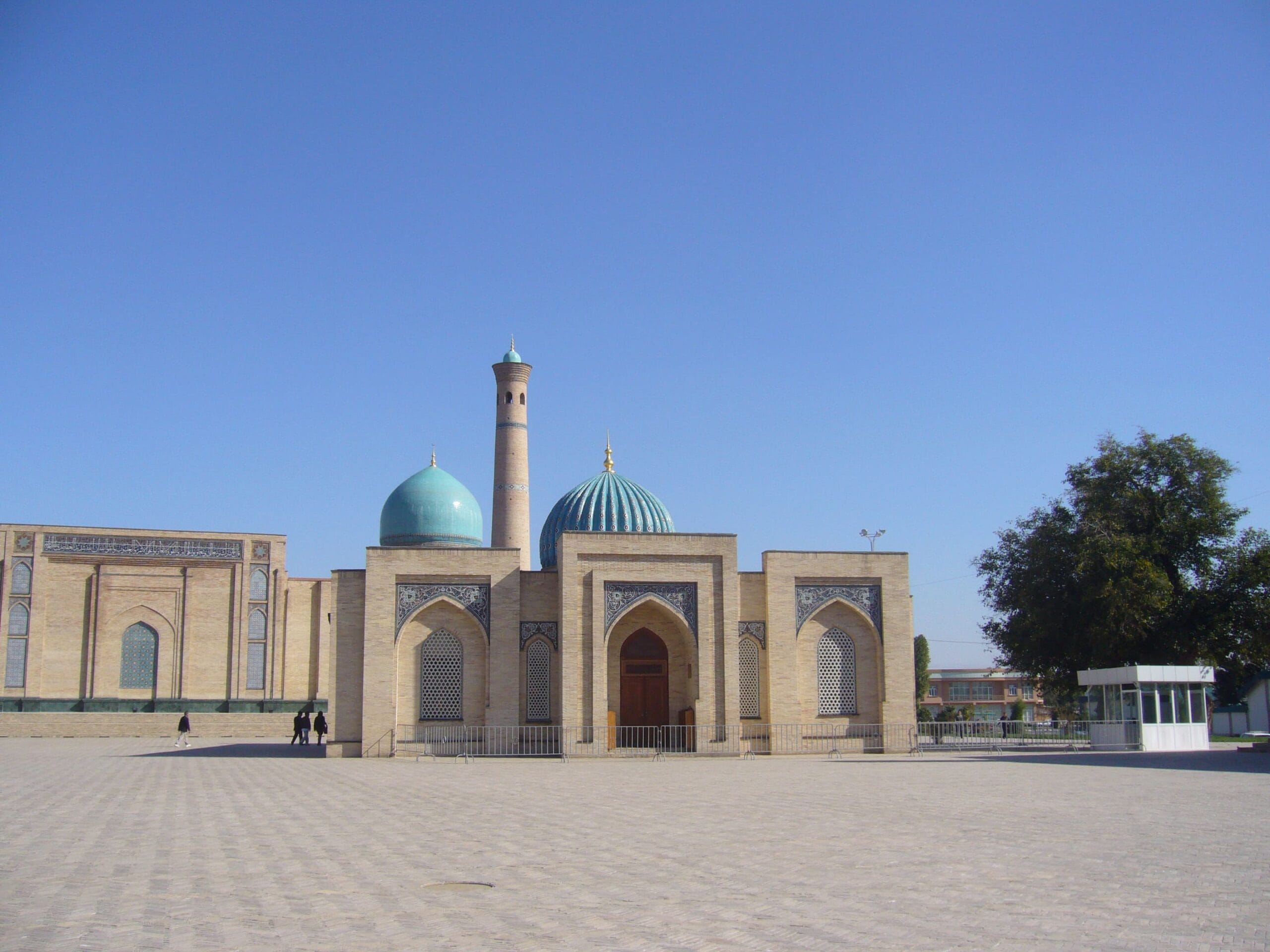
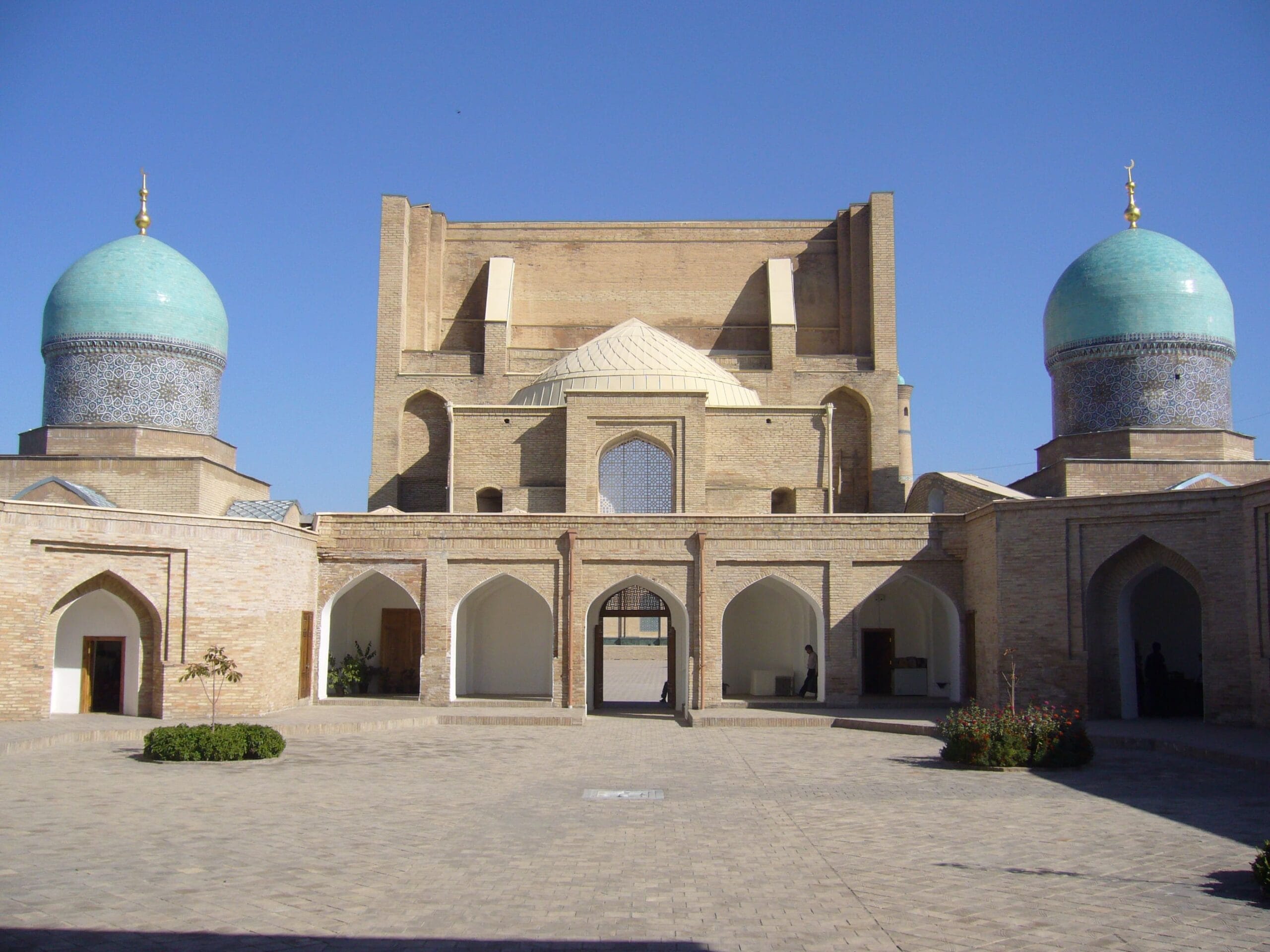
Visit the ancient city: Hast Imam complex, Barak Khan Madrasah, Kaffal Shoshi Mausoleum, colorful Chorsu Bazaar, Abulkasim Madrasah.
Overnight at the hotel.
Day 3: Tashkent – Ferghana [B]
Breakfast.
Transfer to the national airport, flight to Ferghana. Arrival and hotel check-in.
Once, Ferghana was one of the cradles of the Zoroastrian religion and played a central role in the history of the powerful Mughal Empire in South Asia and India during the Middle Ages, founded by the king of Ferghana, Babur. Astronomer al-Fergani (805-880) was a native of Ferghana. The modern city of Ferghana was founded by the Russians in 1876 as a colonial garrison city, a suburb of Margilan (northwest of it). Initially named New Margilan, it was renamed Skobelev in 1910, after the first Russian military governor of the Ferghana Valley. In 1924, after the Bolshevik conquest of the region in 1918-1920, the city’s name was changed to Ferghana, after the province it once served as the center of. Visit the local museum, bazaar, and Al-Fergani Park.
Overnight at the hotel.
Day 4: Ferghana – Margilan – Andijan [B] 150 km
Breakfast.
Morning trip to Margilan to visit the “Yodgorlik” silk factory, where traditional ikat silk weaving is done. You will be able to see all stages of silk production, from cocoon to fabric length, in several buildings. Continue to Andijan. Visit the Khiva archaeological site where a large Buddha statue was found. Then head toward Andijan. Visit the Juma Mosque, the bazaar, and Babur Park, a meeting place. Return to Ferghana.
Overnight at the hotel.
Day 5: Ferghana – Rishton – Kokand [B] 90 km
Breakfast.
Departure to Kokand.
Arrival in Kokand and hotel check-in.
Visit the palace of the last Khan of Kokand, Khudoyar Khan, built in the late 19th century, Norbutabay Madrasah from the 17th century, and the Jamiy Mosque, the largest in the city, built in the 19th century.
Overnight at the hotel.
Day 6: Kokand – Tashkent [B] 220 km
Breakfast.
Departure for Tashkent along the road passing through the Kamchik Pass tunnels (4 hours).
Arrival and hotel check-in. In the afternoon, visit the Museum of Applied Arts, located in the luxurious residence of Prince Polovtsev. We will also visit several metro stations, including Independence Square and Amir Timur Square.
Overnight at the hotel.
Day 7: Flight Tashkent – Nukus [B]
Breakfast.
Morning transfer to the airport and flight to Nukus.
Nukus is the capital of Karakalpakstan, a modern city and the economic and cultural center of the republic.
We will visit the incredible Savitsky Museum, rich in paintings from the 1920s and 1930s. Continue the visit to the main bazaar of the city near the museum.
Excursion about 15 km west of Nukus to visit the sacred sites of Mizdakhana and Yusup Ishan, large necropolises with thousands of tombs on hills.
Overnight at the hotel.
Day 8: Nukus – Excursion to the Aral Sea [BLD] 400 km
Breakfast.
Depart by off-road vehicle to search for the Aral Sea, which has retreated more than 150 km from its ancient shores. The Aral Sea, once the size of Portugal, is now a salty lake drying in the middle of the desert. Thirty years of intense cotton monoculture and the diversion of two rivers for irrigation that once fed the Aral Sea led to an unprecedented ecological disaster.
Walk around the lake.
Day 9: Aral Sea – Moynak – Nukus [BL] 400km
Breakfast. Return to Nukus. On the way, stop in Moynak to visit the boat graveyard and a small museum dedicated to fishermen.
This small museum reflects the ecological disaster in the region. Today, 28 endemic species of the Aral Sea have disappeared. Only one species of ray remains, imported and selected to survive at such salinity levels. Its long-term survival is not guaranteed even in the Small Sea. Huge amounts of pesticides and insecticides, which were once carried by two rivers flowing into the sea, have settled on the pool’s bottom. As the waters retreated, salt and other pollutants became exposed to the open air due to strong winds. These factors have led to a sharp increase in child mortality (one of the highest in the world today), a rise in cancer rates, anemia, and the development of other respiratory diseases, directly related to the chemicals, as confirmed by WHO studies.
Arrival in Nukus.
Hotel check-in. Overnight.
Day 10: Nukus – Desert Fortresses [BLD] 200km
Breakfast. Departure for Toprak Kala, the imposing ruins of a massive fortress (1.5 hectares), which operated from the 1st century BC to the 4th century AD. Toprak Kala, a UNESCO World Heritage site, was the residence of the Khwarezmian kings. The two fortified complexes, Toprak Kala and Ayaz Kala, spanned previously cultivated and wooded areas.
Overnight in a yurt at the foot of Ayaz Kala.
Day 11: Desert Fortresses – Khiva [B] 90km
Breakfast.
Departure for Khiva via the countryside along the Amu Darya River, where former collective farms are located.
Arrival and hotel check-in.
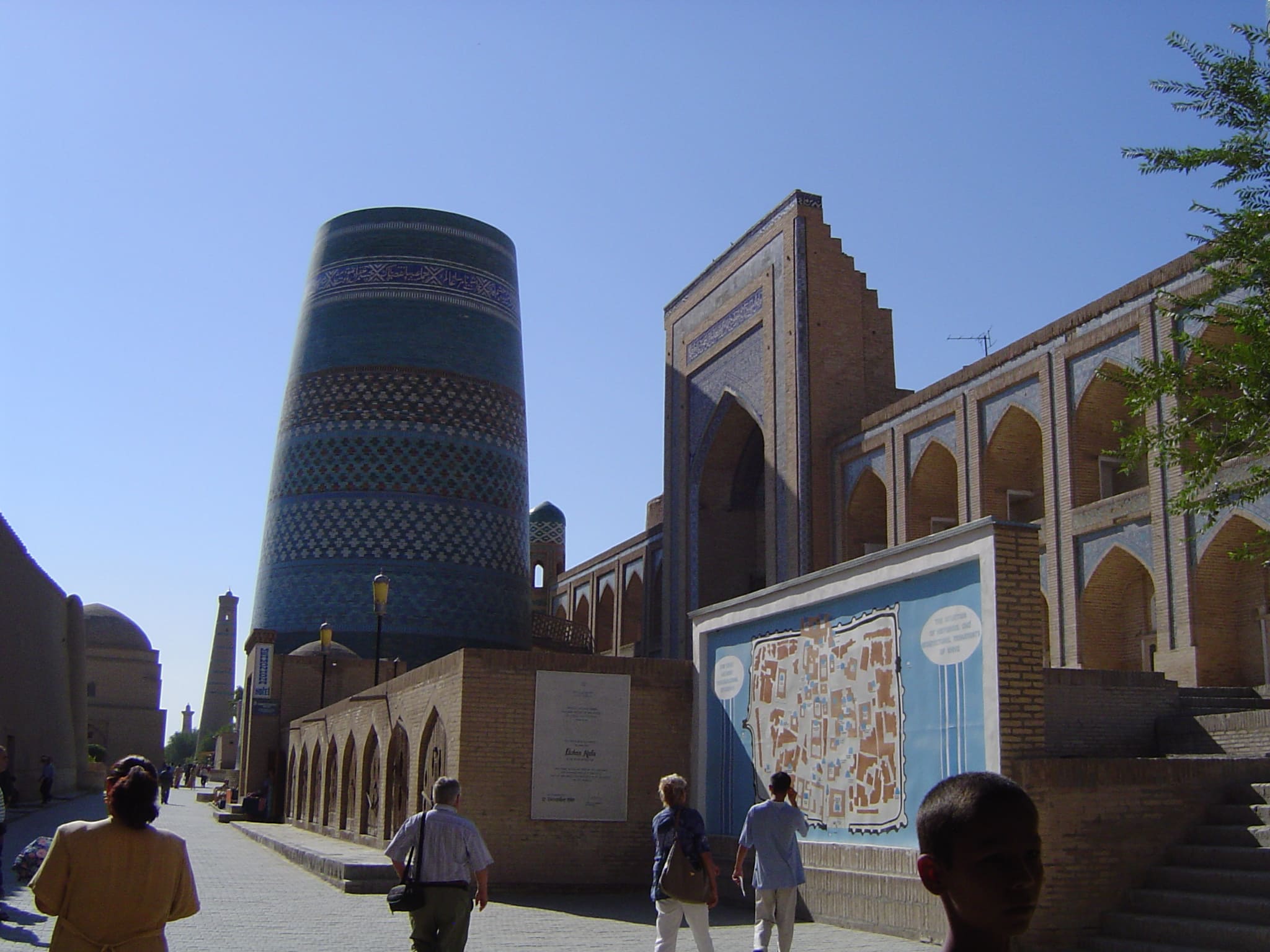
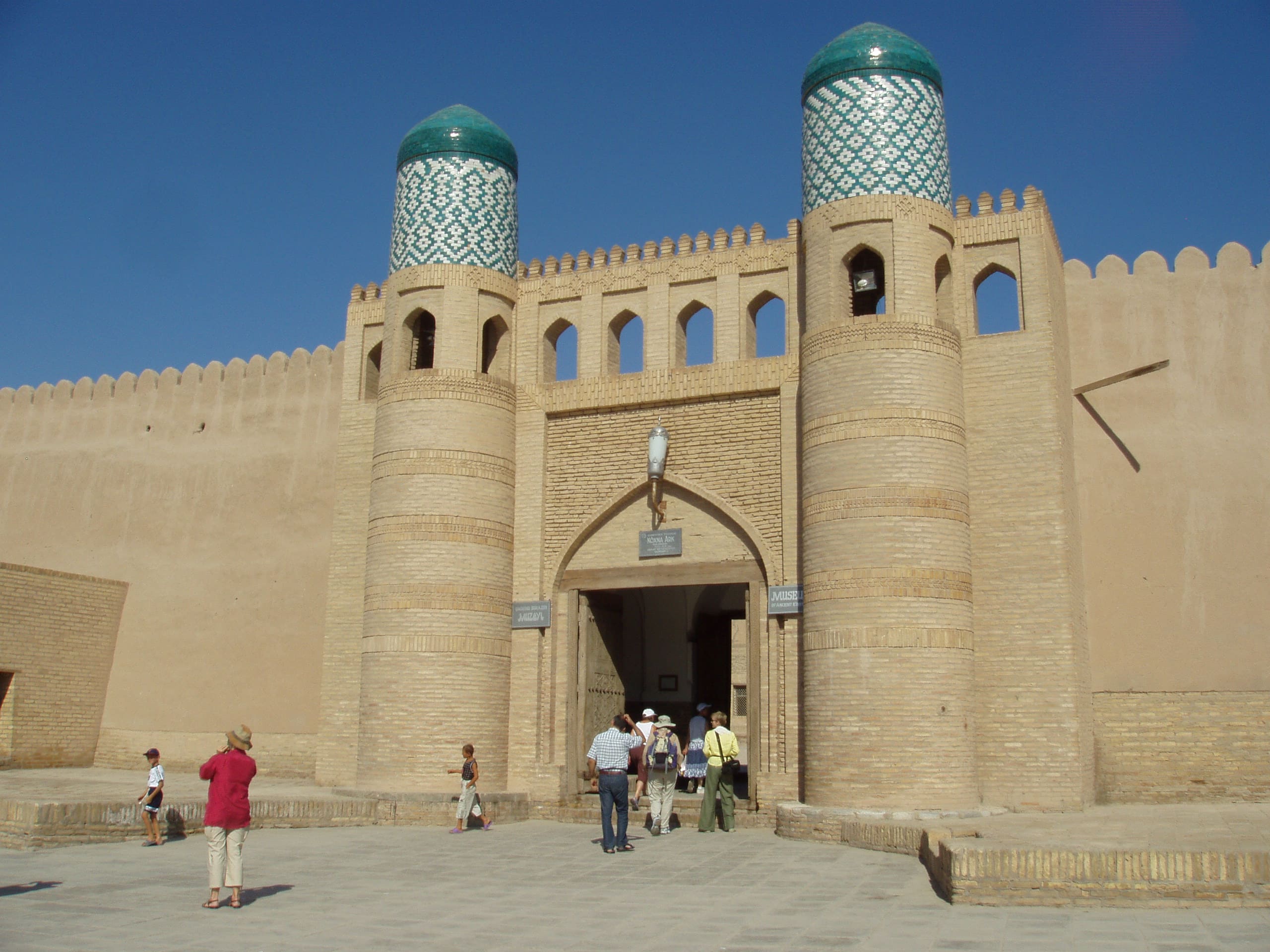
A tour of the last capital of Khwarezm, Khiva, provides a view of the city in its ideal state as it was between the 18th and early 20th centuries, with 2200 meters of undamaged walls that form the Kunia Ark, the “old citadel,” and enclose the city’s interior.
Visit the Ata Darwaza gates (one of the gates built in the 19th century at the four cardinal points) and proceed along one of the two main arteries of the city. Visit Ichan Kala, the inner city, and its houses with rare ornamental details (19th-century doors and sculptural columns), the Kunia Ark (“old fortress”); the Khan Muhammad Amin Medressa, the largest in Khiva; the Said Alauddin Mausoleum; and the Juma Mosque.
Overnight at the hotel.
Note: (Optional) It is recommended to climb the Ak Sheikh Bobo bastion at sunset to enjoy a panoramic view of the ancient city.
Day 12: Khiva [B]
Breakfast.
Continue visiting Khiva in the morning, free walk in the afternoon.
Visit the Pahlavan Mahmud Mausoleum (14th-19th centuries), Islam Khodja Medressa with its minaret, the museum of Khodai Berdi Devanov, the first Uzbek photographer, as well as the market and architectural ensemble of Allakuli Khan.
Overnight at the hotel.
Day 13: Khiva – Bukhara [B] 470km
Breakfast. Departure for Bukhara across the desert. Views of the Amu Darya River and crossing the Kyzyl Kum desert.
Arrival in the late afternoon and hotel check-in.
Overnight at the hotel.
Day 14: Bukhara [B]
Breakfast.
Full-day excursion in Bukhara:
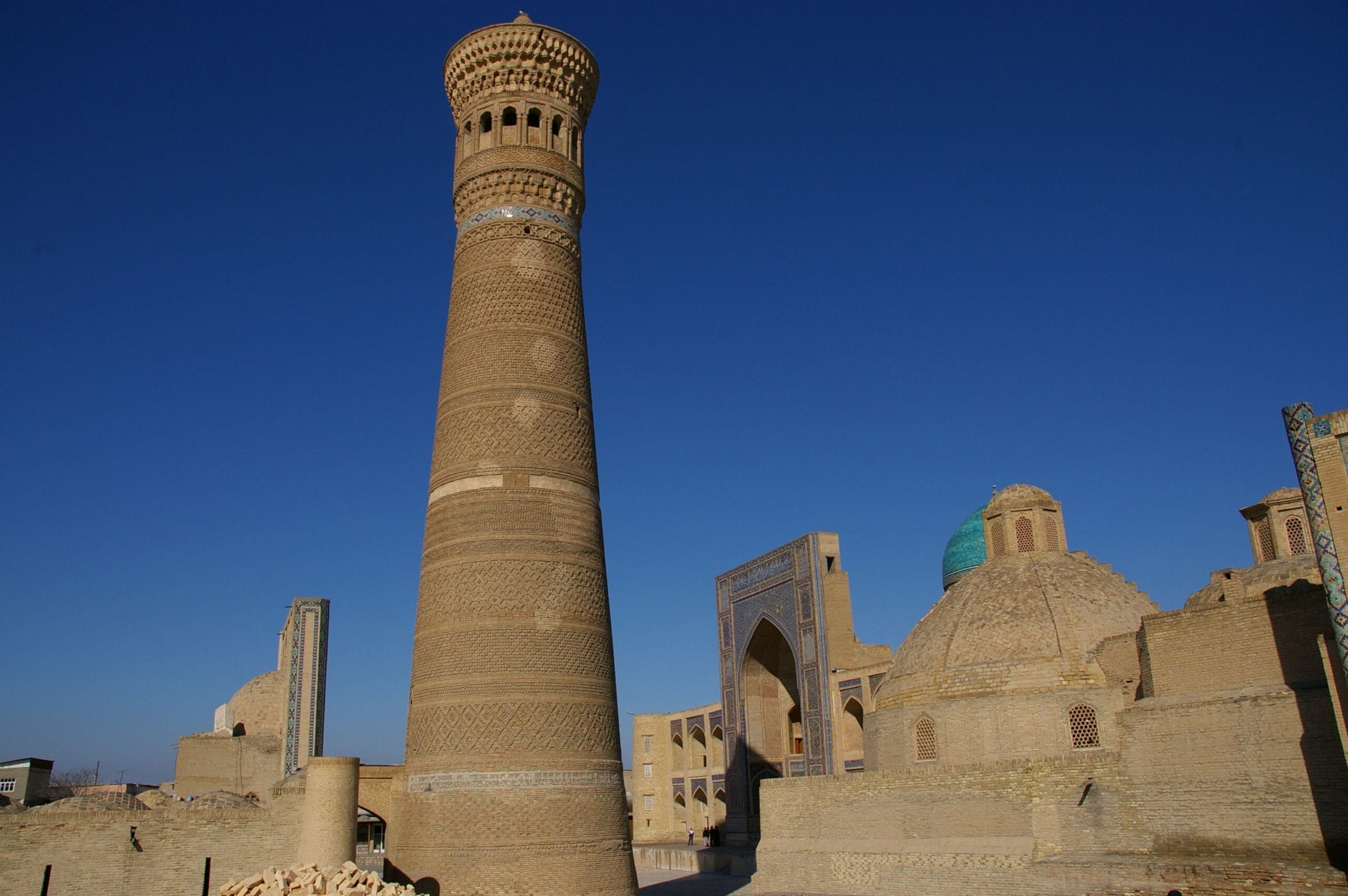
Visit the Lyabi House complex (16th-17th centuries), including the Nadir-Divan-Begi Medressa and Khanaka, as well as the Kukeldash Medressa built in the 16th century. Magoki Attari Mosque, Toki Sarrafon, the dome of jewelers, and the trading dome. Visit the Po-i-Kalon ensemble from the 12th-15th centuries. It includes the minaret, nicknamed “the minaret of death,” which was used only for calling the faithful to prayer, the mosque, and the medressa. Miri Arab, an exquisite example of brick architecture; Ulugh Beg Medressa (15th century), built by Ulugh Beg, the Samarkand prince-astronomer; and Abdulaziz Khan Medressa (17th century).
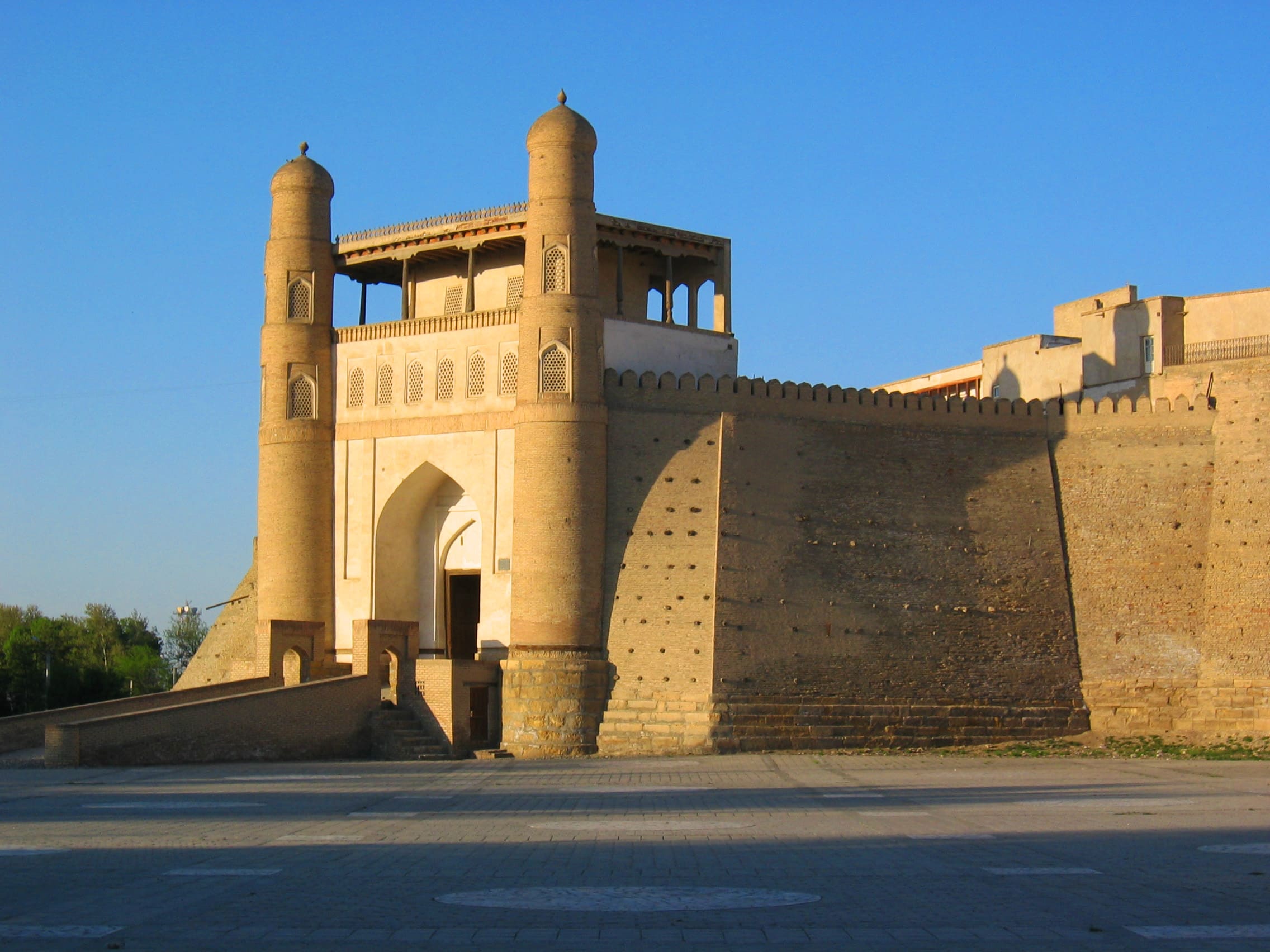
Continue in the afternoon to visit the Ark Fortress (citadel), the fortified residence of the emirs of Bukhara, the Bolo Haouz complex, the Samani Mausoleum (9th century), also known as the “pearl of the East” – the oldest Muslim mausoleum in Central Asia, the Chashma Ayub Mausoleum, and pass through the covered market.
Overnight at the hotel.
Day 15: Bukhara [B]
Breakfast.
Excursion outside the city to the summer residence of the last emirs of Bukhara before their final surrender, then to the living pilgrimage site of Bahauddin Naqshbandi, where the Sufi saint is revered by all. We also visit the summer residence of the emirs of Bukhara – Sitorai-Mohi-Hossa, the necropolis of Chor Bakr, and the Chor Minor Medressa.
Return to Bukhara.
Overnight at the hotel.
Day 16: Bukhara [B]
Breakfast.
Free day to fully enjoy this important stage of the Silk Road.
Overnight at the hotel.
Day 17: Bukhara – Baysun [BD]
Breakfast.
Drive to Baysun via the southern route, first crossing the steppe, then arriving at the mountains by midday.
Visit the Boysun craft center to learn about traditional embroidery, tubeteikas, rugs, and “janda” fabrics. Stroll through the fruit and vegetable market. Drive to the home of a local craftsman: visit his workshop and learn to play the jaw harp. Dinner and overnight in a local’s home.
Day 18: Boysun – Termez [B]
Breakfast.
Drive to the village of Omonkhona, a sacred spring for the locals (21 km). Visit Omon Khona: stop at the canyons for magnificent views. Visit the spring and its surroundings: a mosaic of faces, pilgrims, flowers, and smells…. In this village, thanks to the spring, traditional treatments are conducted in the salt caves of the Flandria Canyon. Opportunity to meet the locals: hospitable, curious, friendly.
Continue to Termez. On the way, stop for photos at the Iron Gates (Tamerlane’s Gates), the Gissar Mountain Range, and another stop in the village of Sayrob to visit several centuries-old plane trees.
Hotel check-in.
Day 19: Termez [B]
Breakfast.
Visit:
Termez Historical and Archaeological Museum
Khanaqa (guesthouse) of Kirk Kiz (40 girls) (9th-14th centuries)
The religious and burial monumental ensemble of Sultan Saodat (10th-18th centuries)
The archaeological site of Fayaz Tepe, remains of an ancient Buddhist temple and monastery, the Al-Termizi Mausoleum, and the Zurmala Buddhist temple
Monumental ensemble of Hakim at-Termizi (10th-15th centuries)
The fortified khanaqa of Kirk Kiz (Qyrq Qyz: “forty girls”) outside the city.
Overnight at the hotel.
Day 20: Termez – Shahrisabz – Ayakchi Village [BD] 300km
Breakfast.
Early departure from Termez to Shahrisabz (4 hours of travel on the southern route).
Sightseeing in the city: Ak-Saray (White Palace) of Timur, architectural complexes of Dorut Tilavat (house of meditation) and Dorut Saodat (house of happiness), including the Kuk Gumbaz mosque, the mausoleum of Jahangir, Timur’s elder son.
After visiting, continue to the village of Ayakchi. Check into a private home. Two ethnic groups coexist here: Uzbeks and Tajiks.
Dinner and overnight in a local’s home.
Day 21: Ayakchi Village [BD] 300km
Breakfast. Hiking:
A light walk through the valley (4-5 hours) near a stream, allowing us to enjoy the fresh air and breathtaking valley landscapes! Picnic at a place called Alvastikul (Lake of the Djinns).
Return to the hosts for dinner and overnight.
Day 22: Ayakchi Village – Samarkand 140km [BL]
Breakfast.
Hiking.
Short drive to Mingchinor. Walk through beautiful forest landscapes and reach the Takh-takaracha Pass at 1800 meters. Picnic by a stream. Then descend to the car and drive to Samarkand. Hotel check-in.
Overnight at the hotel.
Day 23: Samarkand [B]
Visit the Shah-i-Zinda mausoleum complex (“the living king”), the observatory of Ulugh Beg built on the Tai-i-Rassad hill, whose giant sextant was one of the most efficient instruments of its time. We will remember this amazing figure, Ulugh Beg, the grandson of Tamerlane, a prince, poet, philosopher, and astronomer.
Overnight at the hotel.
Day 24: Samarkand [B]
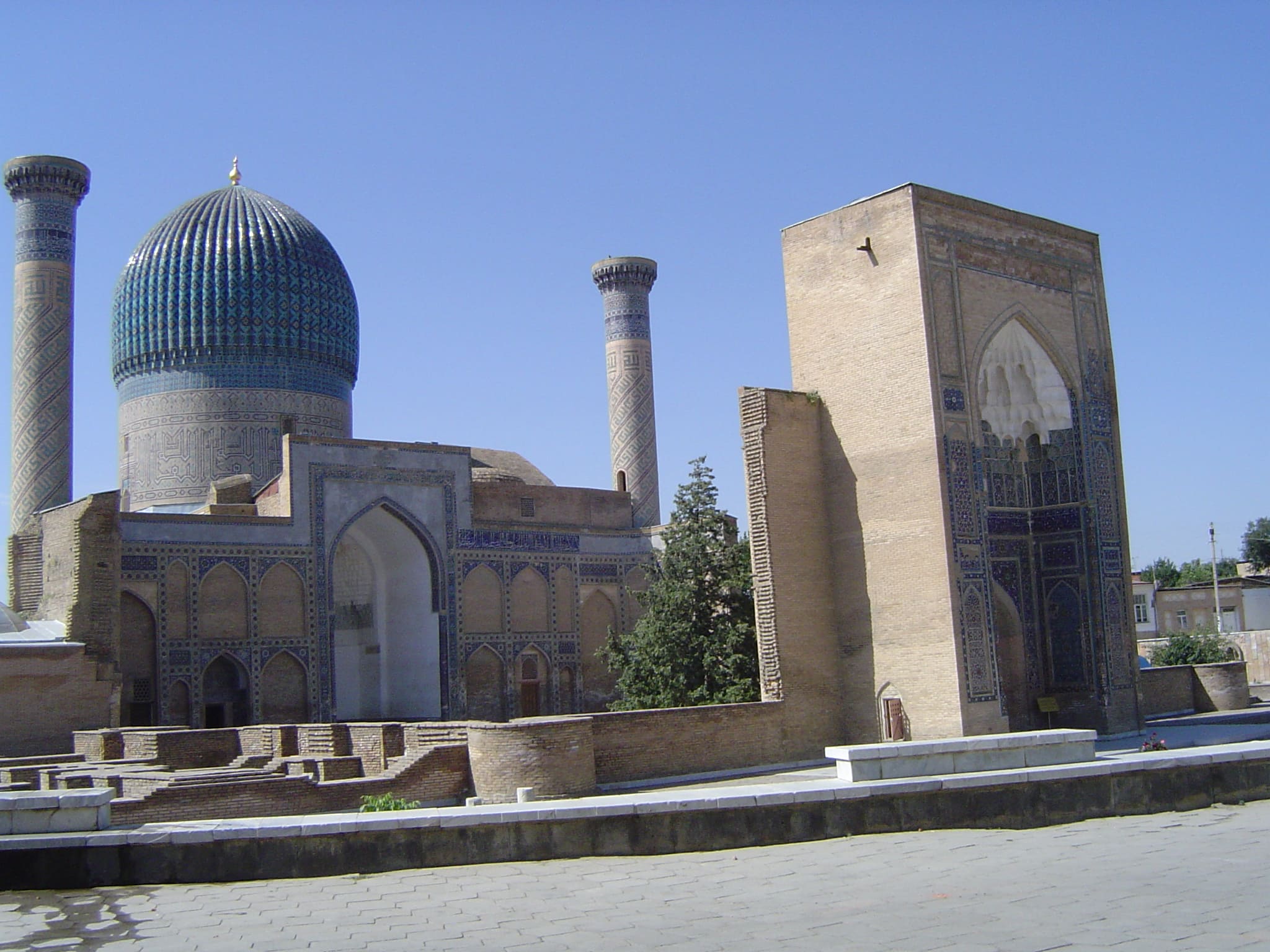
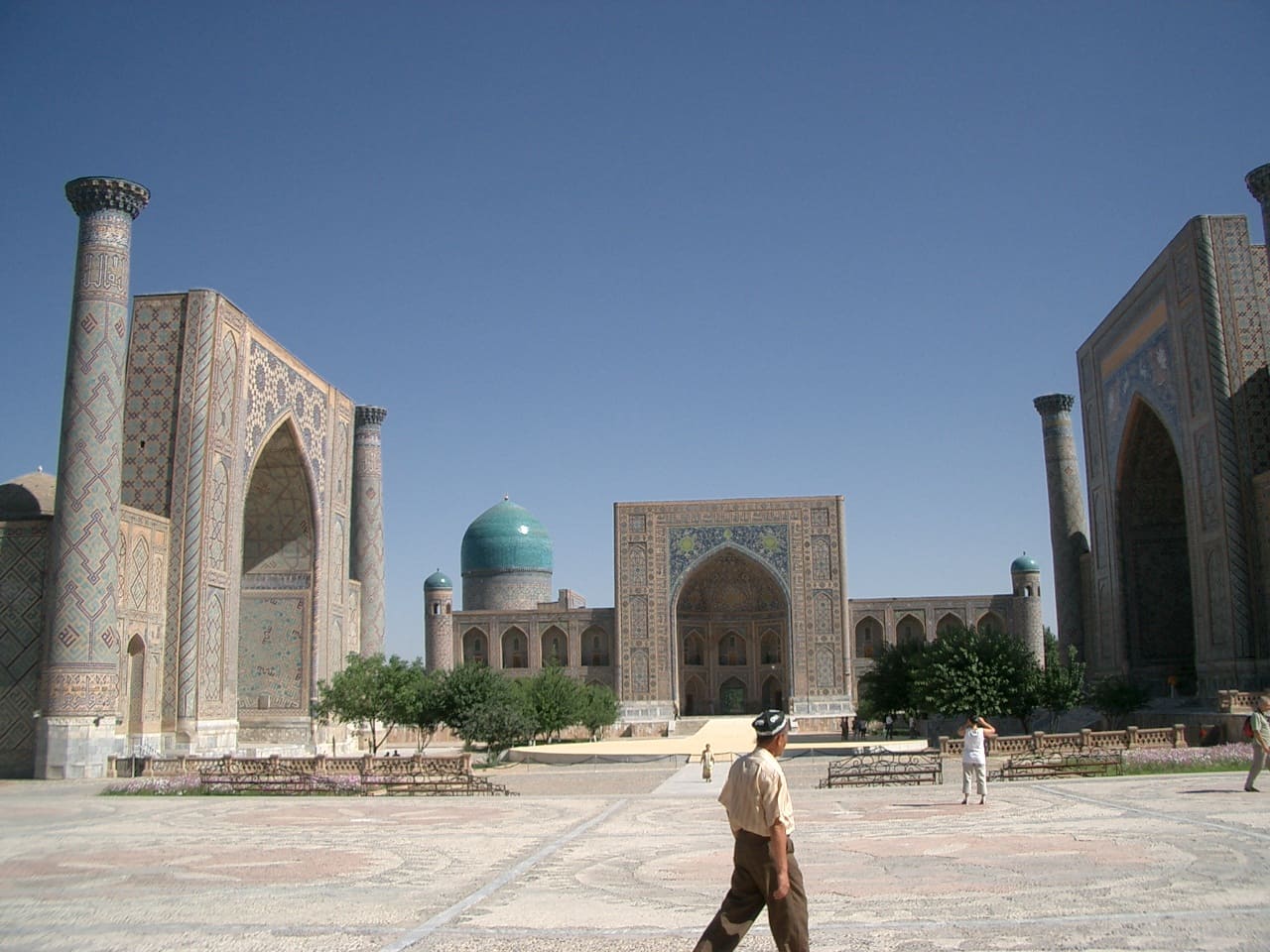
Continue to explore the legendary city at a leisurely pace by visiting the grand Registan Square, the mythical “place of sands,” where the facades of two medressas and a mosque form a symphony of dazzling ceramics, and then the majestic mausoleum of Ruhabad and Gur-e-Amir.
Overnight at the hotel.
Day 25: Samarkand – Tashkent by train [BD]
Free morning. Evening departure to Tashkent (2 hours 10 minutes). Farewell dinner.
Transfer to the airport around 11:00 PM (restaurants close around 11:00 PM).
End of services.
Day 26: Tashkent – Europe
Included in the price:
Transportation as shown in the itinerary.
Accommodation in a double room.
Meals on days 8, 9, 10, and 11.
French-speaking guide.
Entrance to museums and attractions.
El Merosi Theater in Samarkand.
Visit to a paper-making workshop in Samarkand.
Folklore concert in Khiva.
Not included in the price:
International flight, Tashkent – Nukus flight (additional 110 euros), Tashkent – Fergana flight (additional 80 euros).
Visa fees.
Meals not specified.
Single room supplement.
Photography and video recording rights at attractions.
Tips for drivers and guides.
Registration and Rules: Registration for this trip is confirmed after written confirmation and payment of a deposit of 30% of the total trip cost. An invoice specifying the prepayment method will be sent to you via email after accepting the offer. The remaining balance must be paid one month prior to departure, without a reminder from our side. If you register less than a month before departure, full payment will be required upon acceptance of the offer.
Cancellation by the client: In case of cancellation more than 40 days before departure, the deposit paid will be refunded, minus a fixed fee of 50 euros per person (application fee and bank charges).
Cancellations made within 40 days of departure will result in the following deductions:
40 to 22 days: 25% of the trip cost.
21 to 15 days: 50% of the trip cost.
14 to 8 days: 75% of the trip cost.
Less than 8 days: 100% of the trip cost.
Please note: In case of cancellation, notify us as soon as possible via email or fax, as the date of cancellation will be used to calculate the refund.
Any trip interrupted or shortened by the participant for any reason will not be eligible for a refund.
Cancellation by Roksi Sam Travel: Cancellations may occur due to circumstances beyond our control (political unrest, security issues, etc.). In such cases, Roksi Sam Travel will fully refund the trip, but no other compensatory compensation will be provided.

Your guide
to Central Asia
CONTACTS
- +998 78 210 02 09
- +998 66 234 98 64
- Email: roksisamtravel@mail.ru
- Samarkand city, st. Mirzo Ulugbek, 75